Multichannel Order Management System: Scale Without Overselling
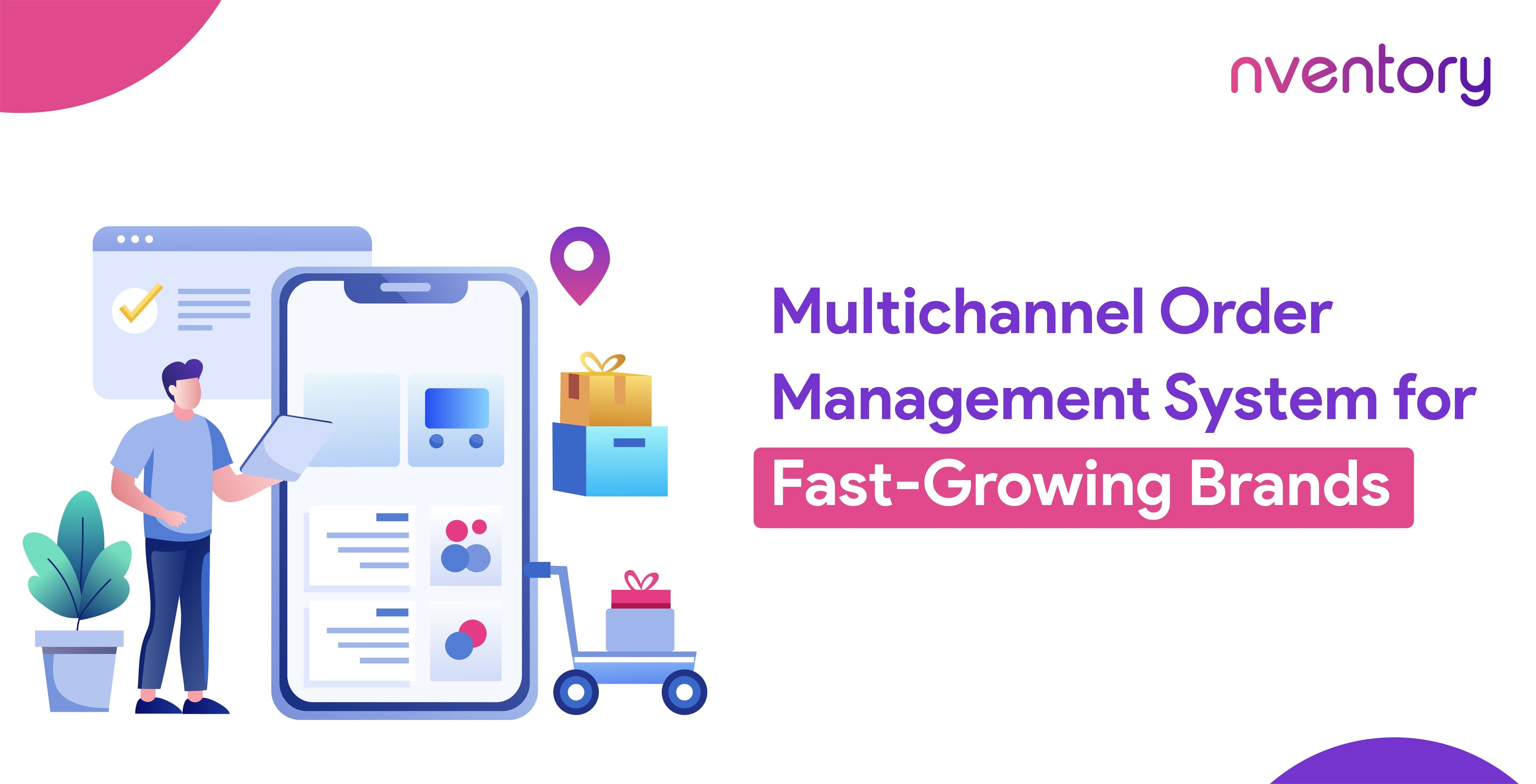
You don't feel the chaos when you're selling on one channel. But the moment you add Amazon, Walmart, TikTok Shop or eBay to your Shopify store, things get real… fast:
- Stock levels stop matching reality
- Orders scatter across dashboards
- The warehouse starts firefighting
- And overselling quietly destroys your reviews
That's exactly where a multichannel order management system becomes your unfair advantage: one "source of truth" that centralizes orders, keeps inventory accurate and turns fulfillment into a repeatable machine.
What Is A Multichannel Order Management System?
A multichannel order management system (OMS) is the operational layer that pulls orders from all your sales channels into one dashboard, syncs inventory across channels in (near) real time and orchestrates fulfillment, so you can grow without breaking your customer experience.
Nventory positions this as the "operating system" for multi-channel brands: real-time inventory sync, centralized fulfillment and workflow automation built to prevent overselling.
The Moment You Need One (A Quick Reality Check)
If any of these sound familiar, you're already paying the "multichannel tax":
1) "We oversold again…"
Overselling happens when channels update inventory too slowly or when multiple orders hit at once and your systems collide. Nventory explicitly focuses on data integrity, race conditions and conflict prevention for multichannel scale. Learn the 3-layer defense framework to prevent overselling.
2) "Our team lives in spreadsheets"
Manual tracking creates blind spots and blind spots become refunds, cancellations and churn.
3) "Shipping takes forever and costs too much"
Without automation and smart routing, you ship from the wrong place, choose the wrong carrier and burn margin.
7 Must-Have Capabilities In A Modern OMS (What To Look For In 2026)
1. Centralized order control (single dashboard)
Your OMS should consolidate orders from marketplaces and storefronts so your team can view, edit and fulfill from one interface. That's a core promise on Nventory's platform and order management module.
2. Real-time inventory sync (not "every 5 minutes")
"Close enough" inventory updates aren't enough anymore; especially during spikes (launches, influencer traffic, Black Friday). Nventory highlights sub-second sync speed and inventory accuracy as a core differentiator.
3. Multi-location inventory management (warehouse reality, not theory)
If you stock products across multiple locations (own warehouse + 3PL + FBA) you need inventory logic that can route orders intelligently based on availability and speed. Nventory calls out multi-location inventory and routing to the nearest fulfillment center.
4. Intelligent order routing (cost + speed automation)
A serious multichannel operation needs rules like:
- Route high-value orders to your fastest warehouse
- Route marketplace orders to FBA
- Route bulky items to the location with the right packaging
Nventory's features emphasize routing logic across FBA/3PL/local warehouses based on availability, priority and shipping cost.
5. Multi-carrier shipping built in (labels + tracking updates)
Shipping shouldn't be a separate "app jungle." Your OMS should compare rates and print labels while pushing tracking back to the channel automatically. Nventory supports multi-carrier flows (USPS/UPS/FedEx/DHL) as a key pillar.
6. Workflow automation (because humans shouldn't do robot work)
Think: VIP tagging, fraud holds, routing rules, auto-splitting shipments. Nventory directly frames this as rule-based automation to eliminate repetitive ops.
7. API-first foundation (so you can integrate your stack)
If you're scaling, you'll eventually need custom flows (ERP sync, WMS picking logic, BI). Nventory emphasizes a developer-first API designed as the foundation not an afterthought.
A Simple Implementation Plan (So You Don't Break Operations During Rollout)
Step 1: Normalize your product data (SKU is your language)
Your OMS becomes the translator between "ASIN", "Variant ID" and warehouse SKUs, this is a core theme in your multichannel scaling resource.
Step 2: Connect channels + define your "source of truth"
Decide what wins when there's conflict: OMS vs channel vs warehouse.
Step 3: Set inventory protection rules (buffers / safety stock)
If you sell fast-moving items, add safety stock logic so "available" never equals "oversold."
Step 4: Build routing rules by location + service level
Start with 2–3 simple rules and expand once stable.
Step 5: Automate shipping + tracking feedback loop
Your OMS should push tracking back to the channel automatically to reduce "where is my order?" tickets.
How To Choose The Right Multichannel Order Management System (Quick Checklist)
Use this shortlist when evaluating platforms:
- ✅ Supports your current + next channels (Shopify + marketplaces/social)
- ✅ True real-time sync & conflict prevention (not just "sync")
- ✅ Multi-warehouse inventory & routing
- ✅ Shipping automation + carrier coverage
- ✅ Automation rules (not manual tagging forever)
- ✅ API + integrations for your stack
- ✅ Pricing scales with growth (transparent tiers, overage logic)
Where Nventory Fits
If your goal is scale without the operational drag, Nventory is built specifically around:
- Centralized order control
- Inventory integrity + conflict prevention
- Multi-location inventory + routing
- Multi-carrier shipping automation
- Workflow automation rules
- Developer-first API
And if you're planning budgets, Nventory publishes tiered pricing (Starter through Premium) that scales by monthly order volume, channels and locations. If you want to see what "no more overselling" looks like in practice, start with a trial or book a demo from the site.
Scale Your Channels, Not Your Chaos
Multichannel growth is exciting until ops becomes a bottleneck. A multichannel order management system gives you the calm, predictable backend that modern ecommerce needs: centralized orders, accurate inventory, automated fulfillment and shipping that doesn't eat your margin.
If you're ready to scale without overselling, start by exploring Nventory's features and solutions then map your rollout plan.
Frequently Asked Questions
Inventory tools focus primarily on stock levels. A multichannel OMS connects orders + inventory + fulfillment + shipping so your entire operation runs from one workflow.
Not always but the second you add marketplaces or multiple fulfillment locations, centralization and real-time sync become critical.
By keeping inventory synchronized across channels in real time and preventing conflicts when multiple orders happen at once (race conditions / overwrites).
Yes, especially if it supports multi-location routing and multi-carrier rate comparisons so you ship from the best location with the best service.
Related Articles
View all
IEEPA Tariff Refunds: $122B Certified, 6.1M Entries Rejected. How Ecommerce Importers Claim Theirs as Phase 3 Opens Oct 6
CBP has certified $122B in IEEPA tariff refunds and rejected 6.1M entries. Here is who actually gets the money, how to claim it, and how to book it per SKU.

MSRP vs MAP vs Retail Price: What Brands and Resellers Actually Have to Honor
MSRP is a suggestion, MAP is a brand's advertising rule, and the retail price is the seller's call. Here's what each one binds, and where the law and marketplaces draw lines.