Headless Commerce vs Monoliths: What Every CTO Needs to Know

The Monolith Trap
For the last decade, e-commerce architecture was dominated by the monolith. Platforms like Magento 1, Salesforce Commerce Cloud, or standard Shopify with its Liquid templating language bundled everything into one giant box. The frontend that the customer sees was inextricably glued to the backend: the database, checkout logic, inventory engine, and order management all lived in one tightly coupled system.
This worked well in 2015. The monolith was fast to launch, easy to understand, and the ecosystem of themes and plugins meant you could get a store live in weeks. But in 2026, the monolith is a straitjacket, and the evidence is everywhere.
Consider what happened when Magento 1 reached end-of-life. Brands that had built their entire operations on the platform faced migration costs averaging $250K to $500K just to move to Magento 2, and that was a migration within the same ecosystem. Salesforce Commerce Cloud customers pay annual licensing fees of $100K or more before a single line of custom code is written. These are not technology costs. They are taxes on architectural decisions made years ago.
The modern symptoms of monolith pain are unmistakable:
- A/B testing requires full QA cycles. Want to test a new product page layout? On a monolith, changing the frontend risks breaking backend functionality, so every experiment needs a full regression test. What should take hours takes weeks.
- Mobile experience is a degraded version of desktop. The monolith renders one set of templates. Your mobile site is not a purpose-built mobile experience. It is the desktop site squeezed into a smaller viewport with responsive CSS and hope.
- Page speed scores languish under 50 on Google Lighthouse. The monolith loads massive JavaScript bundles, legacy jQuery plugins, and server-rendered HTML that was never optimized for Core Web Vitals. Every plugin you add makes it slower.
- Your marketing team files engineering tickets to change a hero banner. This is the breaking point for most organizations. When the people responsible for driving revenue cannot update their own content without a two-week engineering sprint, your architecture is actively harming the business.
If any of these sound familiar, your monolith is no longer serving you. It is constraining you. Enter headless commerce.
What Is Headless Commerce?
Headless commerce is the architectural decoupling of the "Head" (the frontend presentation layer) from the "Body" (the backend commerce engine). In a headless system, these two layers connect exclusively through APIs. The frontend makes API calls to fetch product data, submit orders, check inventory, and process payments. The backend does not know or care what the frontend looks like or what technology it uses.
Think of it this way: in a monolith, the platform controls both the engine and the body of the car. You can change the paint color and add some accessories, but the chassis is fixed. In a headless architecture, the backend is the engine, and you can put that engine into any body you want: a sports car, an SUV, a truck, or something that has not been invented yet.
The API Contract
The fundamental principle of headless is the API contract. The backend exposes RESTful and/or GraphQL endpoints that define what data is available and how to interact with it. The frontend consumes these endpoints. This contract is the only connection between the two layers.
RESTful APIs use standard HTTP methods (GET, POST, PUT, DELETE) with predictable URL structures like /api/products/123 or /api/orders. GraphQL takes a different approach, exposing a single endpoint where the frontend specifies exactly what data it needs in a query language. Both work for headless commerce; GraphQL tends to be more efficient for complex product pages that pull data from multiple sources.
Composable Commerce
Headless commerce is the foundation for a broader concept called composable commerce. In a composable architecture, you do not just decouple the frontend from the backend. You compose your entire commerce stack from best-of-breed services: the best search engine, the best CMS, the best checkout, the best OMS, the best payment processor. Each service does one thing exceptionally well, and they all communicate through APIs.
MACH Architecture
The industry has formalized this approach as MACH architecture:
- M - Microservices: Each business function is an independent service that can be developed, deployed, and scaled on its own.
- A - API-first: Every piece of functionality is accessible through an API. No functionality is locked inside a monolithic core.
- C - Cloud-native: Services run in the cloud with automatic scaling, redundancy, and global distribution.
- H - Headless: The frontend experience is completely decoupled from backend logic.
The simplest analogy: a monolith is like buying a pre-built PC from Dell. It works out of the box, and Dell handles compatibility. Headless is like building a custom rig from the best components: the fastest GPU, the most reliable motherboard, the quietest cooling system. It takes more skill and effort, but the result is purpose-built for your exact needs. And when a better GPU comes out, you swap it without replacing the entire machine.
The Strategic Benefits of Going Headless
Going headless is expensive and complex. So why is every enterprise CTO either doing it or planning to? Because the strategic advantages compound over time and create durable competitive advantages that monolith-bound competitors cannot match.
1. Site Speed and Core Web Vitals
Monoliths are heavy. They load massive scripts, legacy code, and server-rendered HTML that was designed before mobile-first was a concept. Headless frontends built on frameworks like Next.js are engineered for speed from the ground up.
The core stat: A 1-second improvement in page load time can increase conversion rates by 1-3%. For a brand doing $50M per year, that translates to $500K to $1.5M in additional revenue, not from new traffic, but from converting the traffic you already have.
The performance gap is dramatic. Next.js with static site generation (SSG) and incremental static regeneration (ISR) serves pages in 50 to 100 milliseconds. A typical monolith serves the same page in 500 to 2,000 milliseconds, and that is before you add the inevitable plugins and customizations that slow it further.
This matters for SEO as well. Google has made Core Web Vitals a direct ranking factor. Largest Contentful Paint (LCP), First Input Delay (FID), and Cumulative Layout Shift (CLS) all influence where you appear in search results. Headless sites typically score 90 or above on Google Lighthouse. Monolithic commerce sites typically score 40 to 60. That is not a minor difference. It is the difference between page one and page two of search results.
2. True Omnichannel Capability
In a monolithic architecture, your "omnichannel" strategy is really a multi-platform strategy: you have a website, and then you build separate integrations for each additional channel. Each integration is a custom project with its own data mapping, its own logic, and its own bugs.
In a headless architecture, the same product API feeds every channel. Your website, your mobile app, your in-store POS, a smart mirror in a fitting room, a voice assistant, and a social commerce widget all consume the same endpoints. Product data is maintained in one place and published everywhere simultaneously.
This is not theoretical. The channels are expanding rapidly:
- IoT devices: Smart refrigerators that reorder groceries, connected fitness equipment that suggests supplements.
- Augmented reality: AR try-on experiences that need real-time product data and inventory availability.
- Social commerce: Embedded buy buttons on TikTok, Instagram, and Pinterest that need to check inventory and process checkout in real time.
- In-store digital: Endless aisle kiosks, digital signage, and clienteling apps that all need the same product catalog and inventory truth.
Every new channel you want to sell through is just another frontend consuming your existing APIs. There is no re-platforming, no data duplication, no integration project. That is the power of decoupled architecture.
3. Unlimited UX Customization
On a monolith, your frontend is constrained by the platform’s theme engine. Want a complex "Build Your Own Bundle" interface with drag-and-drop composition? On Shopify Liquid, this requires hacky metafield configurations and third-party apps that inject JavaScript and slow down the page. On a headless React application, it is just a component.
The possibilities expand dramatically when you remove the theme engine constraint:
- Interactive size finders that use machine learning to recommend fit based on past purchase data and body measurements.
- 3D product configurators that let customers rotate, zoom, and customize products in real time using WebGL or Three.js.
- Dynamic pricing displays that show tiered pricing, volume discounts, or personalized offers based on customer segment, all rendered client-side with no page reload.
- Campaign landing pages that the marketing team can deploy in hours using a headless CMS, without filing an engineering ticket or waiting for a sprint.
When your frontend is a modern JavaScript application, the only limit is your design team’s imagination and your engineering team’s skill. You are not fighting the platform. You are building on top of it.
4. Independent Scaling
In a monolithic architecture, everything scales together. If Black Friday traffic spikes 10x, you need to scale the entire platform, including the admin panel, the order processing, the inventory engine, and the frontend, all at once. This is expensive and often results in the weakest link bringing down the entire system.
In a headless architecture, the frontend scales independently from the backend. Black Friday traffic spike? Scale the CDN and edge functions to handle the surge of page views. The backend continues handling its normal load of order processing and inventory updates. If your checkout service is the bottleneck, scale that microservice independently without touching the product catalog service.
This translates directly to cost efficiency. You are not paying to scale systems that do not need scaling. You allocate resources precisely where demand dictates.
5. Faster Time-to-Market
In a monolith, frontend and backend teams are coupled. A frontend change might require a backend deployment. A backend API update might break the theme. Teams step on each other, and release cycles slow to the pace of the slowest dependency.
In a headless architecture, the frontend team ships features independently. They deploy a new product page design without waiting for a backend release. A/B tests deploy in minutes, not days. The backend team can refactor the order processing pipeline without touching or risking the customer-facing experience.
Need to launch a mobile app? You do not re-architect the backend. You build a new frontend that consumes the same APIs. The backend team does not even need to be involved beyond confirming the API contract. A channel that would take 6 months on a monolith can launch in 6 to 8 weeks on a headless stack.
The Cost of Complexity: The Reality Check
Every headless commerce vendor will tell you about the benefits. Fewer will be honest about the costs. Headless is not for everyone, and going headless prematurely is one of the most expensive mistakes a growing brand can make. Here is the full picture.
1. Initial Investment ($100K-$500K+)
A monolithic Shopify Plus store costs approximately $2,000 per month in platform fees plus $20K to $50K for a custom theme and initial setup. You can be live in 4 to 8 weeks.
A headless commerce build is a fundamentally different scope. Here is the cost breakdown for a mid-market brand in 2026:
- Frontend build (Next.js or Remix): $50K to $150K. This includes the design system, component library, product listing pages, product detail pages, cart, checkout, account management, and all supporting pages.
- Middleware and API layer: $30K to $100K. The orchestration layer that connects your frontend to multiple backend services, handles authentication, caching, and data transformation.
- Integrations: $20K to $80K. Connecting your CMS, search engine, payment processor, OMS, shipping providers, analytics, and marketing tools. Each integration is a mini-project.
- Testing and QA: $20K to $50K. End-to-end testing across all flows, performance testing, accessibility testing, cross-browser and cross-device testing.
- DevOps and infrastructure: $20K to $50K. CI/CD pipelines, staging environments, monitoring, alerting, CDN configuration, and infrastructure-as-code setup.
Total: $140K to $430K for the initial build, with most mid-market implementations landing in the $200K to $350K range. Enterprise implementations with complex requirements easily exceed $500K.
2. DevOps Overhead
With a monolith, hosting is "handled." Shopify guarantees 99.99% uptime. You do not think about servers, CDNs, or deployment pipelines.
With headless, you own the middleware. You are responsible for the connection between the CMS, the PIM, the checkout engine, and the frontend. You need:
- CI/CD pipelines for multiple services, each with their own build and deployment process.
- Monitoring and alerting across decoupled systems. When checkout latency spikes, you need to know within seconds whether the issue is in the frontend, the API gateway, the payment processor, or the OMS.
- Incident response procedures for a distributed system where the root cause of a customer-facing error might be three services deep.
- Ongoing infrastructure costs of $15K to $40K per month for hosting, CDN, monitoring tools, and DevOps personnel time.
3. The "Glue" Code Problem
A composable commerce stack might include Algolia for search, Sanity for content, Yotpo for reviews, Stripe for payments, and your OMS for orders and inventory. Each of these services has its own API, its own data model, its own rate limits, and its own release cycle.
The "glue" code that connects them is your responsibility. And it is more complex than it sounds:
- Each integration is a potential point of failure. If Algolia's API has a degraded response time, your product listing pages slow down. If your CMS webhook fails, content updates do not propagate.
- API version updates across 10 or more services require coordination. When Stripe releases a new API version, you need to update your integration, test it against all other services, and deploy without breaking checkout.
- Data consistency across services is not guaranteed. If a product is updated in your PIM, that change needs to propagate to your search index, your CMS product references, and your frontend cache. If any link in that chain breaks, customers see stale data.
4. Team Skill Requirements
A monolithic platform can be customized by a Shopify theme developer or a Magento PHP developer. These are relatively common skill sets, and the talent market is deep.
A headless architecture requires a fundamentally different team:
- Frontend engineers: Proficient in React and Next.js. These are not theme customizers. They are application developers building a production web application.
- Backend and API architects: Experienced in REST and GraphQL API design, event-driven systems, and distributed architecture patterns.
- DevOps engineers: Skilled in infrastructure as code (Terraform, Pulumi), monitoring (Datadog, New Relic), and CDN configuration (Vercel, Cloudflare).
The talent pool is more expensive. A senior frontend engineer with Next.js and commerce experience commands $120K to $180K annually, compared to $80K to $120K for a monolith platform developer. You also need more of them: a headless build typically requires 3 to 5 engineers, while a monolith build might need 1 to 2.
5. Vendor Lock-in Risks (The Irony)
One of the primary arguments for headless is escaping vendor lock-in. The irony is that a composable stack can create a different kind of lock-in: instead of being locked into one vendor, you are locked into a dozen.
- Algolia's search index format is not portable to Elasticsearch or Meilisearch. Migrating means re-indexing your entire catalog and rewriting your search UI.
- Contentful's content models do not export cleanly to Sanity or Strapi. Migrating means restructuring your content and rewriting all content-fetching code.
- Stripe's payment methods, subscriptions, and customer vault do not transfer to Adyen or Braintree.
Data portability is not guaranteed across all vendors. When evaluating services for your headless stack, always ask: "How do I leave?" If the answer is not clear, factor the migration cost into your total cost of ownership.
The Headless Tech Stack: What You Actually Need
If you have decided headless is right for your business, the next question is which tools you actually need. Here is a practical breakdown of each layer.
The Frontend Layer
- Next.js: Most popular choice. SSR, SSG, excellent developer experience. Downside: tight Vercel coupling.
- Remix: Progressive enhancement, nested routing. Downside: smaller ecosystem.
- Hydrogen: Shopify's headless framework. Downside: Shopify ecosystem lock-in.
The Commerce Engine and OMS
- Shopify Plus (Storefront API): Largest ecosystem. Limitation: API gaps and transaction fees.
- BigCommerce: Strong headless APIs, better B2B support, lower cost.
- Custom OMS: Full control, built for your specific operational needs.
The Content Layer (CMS)
- Contentful: Enterprise standard. Downside: expensive at scale.
- Sanity: Developer-friendly, customizable. Best for: editorial control.
- Strapi: Open-source, self-hosted. Downside: you own infrastructure.
The Search and Discovery Layer
- Algolia: Fastest, most feature-rich. Downside: expensive at scale.
- Meilisearch: Open-source alternative for smaller catalogs.
- Elasticsearch: Maximum control, DIY approach.
The Payments Layer
- Stripe: Developer favorite, 135+ currencies, subscriptions support.
- Adyen: Enterprise unified commerce (online + POS).
- PayPal/Braintree: Multi-method API integration.
The Role of Your OMS in a Headless Architecture
Why the OMS Is the "Brain" of Headless
When you go headless, each function becomes a separate service. The OMS holds the operational side together: order lifecycle, inventory truth, fulfillment routing, and channel synchronization. If your OMS fails, your frontend becomes a showroom with no back office.
API-First OMS Requirements
Non-negotiable requirements: RESTful or GraphQL endpoints for every operation, webhook support for real-time events, event-driven architecture with pub/sub patterns, and rate limits handling at minimum 10x normal traffic.
How Nventory Fits Into a Headless Stack
Nventory was built API-first for decoupled commerce:
- Multi-channel sync works independently of your frontend choice.
- Order management exposes REST APIs for the complete order lifecycle.
- Inventory management provides real-time stock levels with sub-second response times.
- Webhook-driven updates keep all channels in sync automatically.
Visit the solutions overview for the full platform.
Migration Roadmap: Monolith to Headless
Phase 1: API Audit and Backend Decoupling (Month 1-2)
Inventory existing APIs, identify gaps, begin decoupling business logic from presentation logic, and set up the OMS in parallel.
Phase 2: Frontend Rebuild (Month 2-4)
Choose your framework (Next.js recommended), build a component library, implement core commerce flows, and connect to commerce APIs.
Phase 3: Data Migration and Testing (Month 4-5)
Migrate catalog and customer data, run shadow mode, performance test at 3x peak, and conduct UAT with real users.
Phase 4: Phased Rollout - The Strangler Fig Pattern (Month 5-6)
Route 10% of traffic to headless, monitor metrics, increase to 25%, 50%, then 100%. Keep the monolith as fallback for one month after full cutover.
Common Migration Pitfalls
- Underestimating "glue" code: typically 30-40% of total project effort.
- Forgetting non-product pages: account management, order tracking, returns portal, wishlist, gift cards.
- Not testing checkout under load: where most headless sites break during traffic spikes.
- Losing SEO equity: every ranked URL needs a 301 redirect to the new frontend.
The Decision Framework: Should You Go Headless?
Here is the framework we recommend for evaluating whether headless is right for your business.
YES, go headless if:
- Your GMV exceeds $10M per year and you have the revenue to absorb the investment.
- Your growth is marketing-led and requires rapid experimentation with landing pages, promotions, and UX.
- Your product catalog is complex: bundling, subscriptions, configuration, custom pricing, or B2B requirements.
- You have an internal engineering team (or a strong agency partner on retainer) capable of maintaining a distributed system.
- You are expanding into multiple channels: mobile app, in-store POS, marketplaces, social commerce.
MAYBE, proceed with caution if:
- Your GMV is between $5M and $10M. You may be approaching the monolith ceiling but may not yet have the resources for the full transition.
- You are hitting specific frontend limitations (page speed, customization) but your backend operations are well-served by your current platform.
- You have a strong agency partner who can build and maintain the headless stack, but you lack internal engineering talent.
- Your technical co-founder is capable but the team is small. The opportunity cost of headless migration versus product development is significant.
NOT YET if:
- Your GMV is below $5M. The complexity and cost of headless will consume resources that should go toward marketing, product development, and customer acquisition.
- Your team is small (fewer than 3 engineers). You do not have the bandwidth to maintain a distributed architecture alongside feature development.
- Your budget is limited. Headless is an investment of $200K+ upfront with $15K-$40K per month in ongoing costs. If this would strain your business, it is not the right time.
- You sell on a single channel (DTC website only). The omnichannel advantages of headless are less relevant if you are not expanding into new channels.
The cost of waiting: every year you delay going headless costs less than going headless too early and drowning in complexity. A monolith that works is better than a headless stack that is half-built and constantly breaking. Wait until the pain of the monolith is greater than the cost of the migration.
Conclusion: Architecture Is Strategy
Your commerce architecture is not just a technical decision. It is a strategic one. The tools you choose today define your agility, your speed, and your ability to capitalize on opportunities for the next 3 to 5 years.
Headless commerce is not about technology for its own sake. It is about removing constraints on growth. It is about giving your marketing team the freedom to experiment without engineering bottlenecks. It is about giving your engineering team the freedom to build the best possible experience without platform limitations. It is about giving your operations team real-time APIs that keep every channel in sync.
For the right brand at the right stage, headless is the rocket ship. It opens performance, flexibility, and scalability that monolithic platforms fundamentally cannot provide. For everyone else, the monolith is still a perfectly good car. It will get you where you need to go, and there is no shame in driving it until you outgrow it.
Start by assessing your current stack honestly. If you are spending more time fighting the platform than building on it, if your marketing team is waiting weeks for simple changes, if your page speed scores are dragging down your conversion rate, it is time to explore headless seriously.
For related reading, explore our guide to OMS features for high-growth brands and the headless commerce glossary for definitions of key terms referenced in this article.
Frequently Asked Questions
Headless commerce is an architecture where the frontend presentation layer is decoupled from the backend commerce engine. They communicate exclusively through APIs. This allows you to use any frontend technology like Next.js or React Native while keeping your order management, inventory, and checkout logic in a separate backend system.
A headless commerce implementation typically costs 100K to 500K or more for the initial build, compared to 20K to 50K for a monolithic Shopify or BigCommerce store. Ongoing costs include 15K to 40K per month for DevOps, hosting, and maintenance. The ROI comes from faster page loads improving conversion and the ability to customize every customer touchpoint.
Generally not below 5 million dollars in annual GMV. The complexity and cost of maintaining a decoupled architecture requires engineering resources most smaller brands do not have. Stick with Shopify or BigCommerce until you hit the frontend limitations ceiling, then consider headless as a strategic investment.
The OMS is the operational brain of a headless stack. While the frontend handles presentation and the CMS handles content, the OMS manages orders, inventory, fulfillment routing, and channel synchronization. In headless architecture, the OMS becomes even more critical because it must expose reliable APIs for every operational function.
Related Articles
View all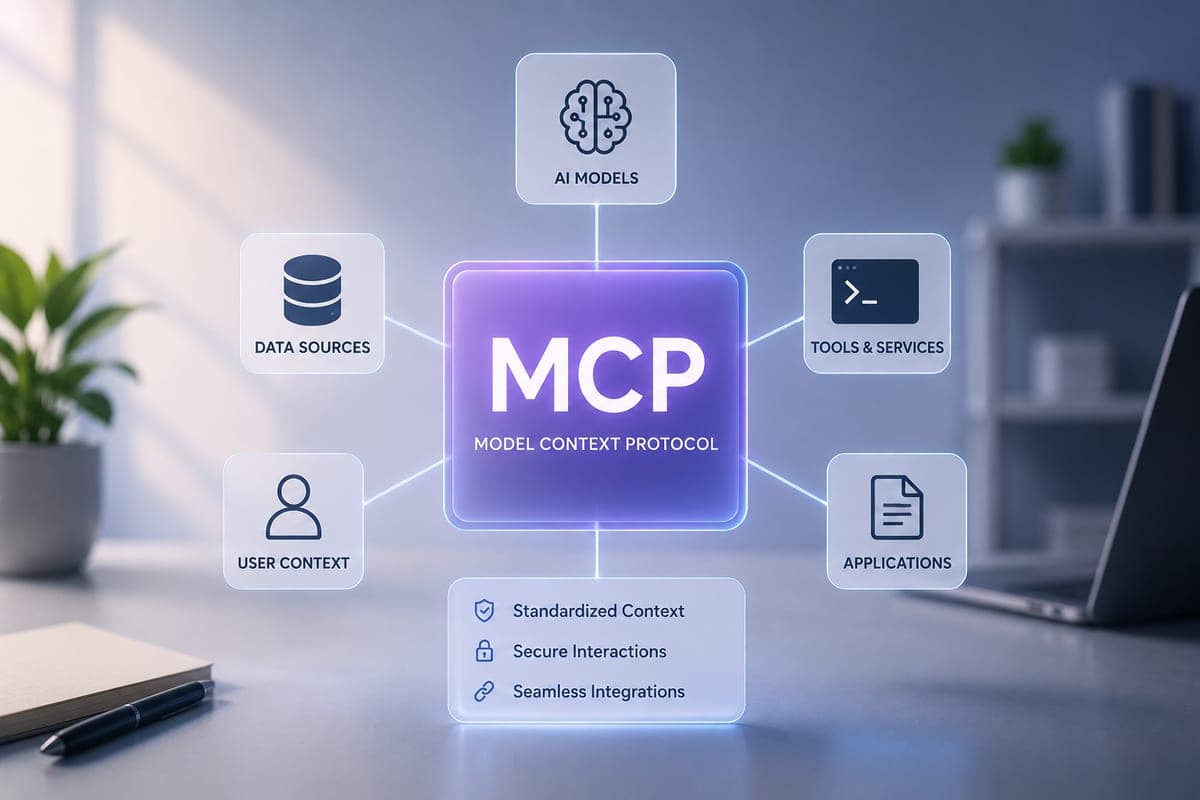
What Is MCP? The Protocol That Makes AI Actually Useful for Ecommerce
MCP is the open standard that connects AI assistants to your live business data. What it is, how it works, how it differs from APIs and RAG, and how to start.

ChatGPT Can Now Buy Products for Your Customers. You Don't Get to Choose Which Ones.
AI agents are making purchasing decisions on behalf of consumers right now. 49% of Americans say AI recommendations already influence what they buy, and 91% of online stores are invisible to these agents. Here is what is actually happening, why your marketing copy is irrelevant, and what you need to fix before your competitors do.

Jack Dorsey Just Fired 4,000 People and Replaced Them with AI. Ecommerce Is Next.
Block CEO Jack Dorsey cut 40% of his workforce and told the world AI made them unnecessary. Shopify followed weeks later. If two of the biggest names in commerce infrastructure are replacing humans with algorithms, the ecommerce sellers still running manual operations are on borrowed time.