The Order Management Software Top Sellers Use in 2026
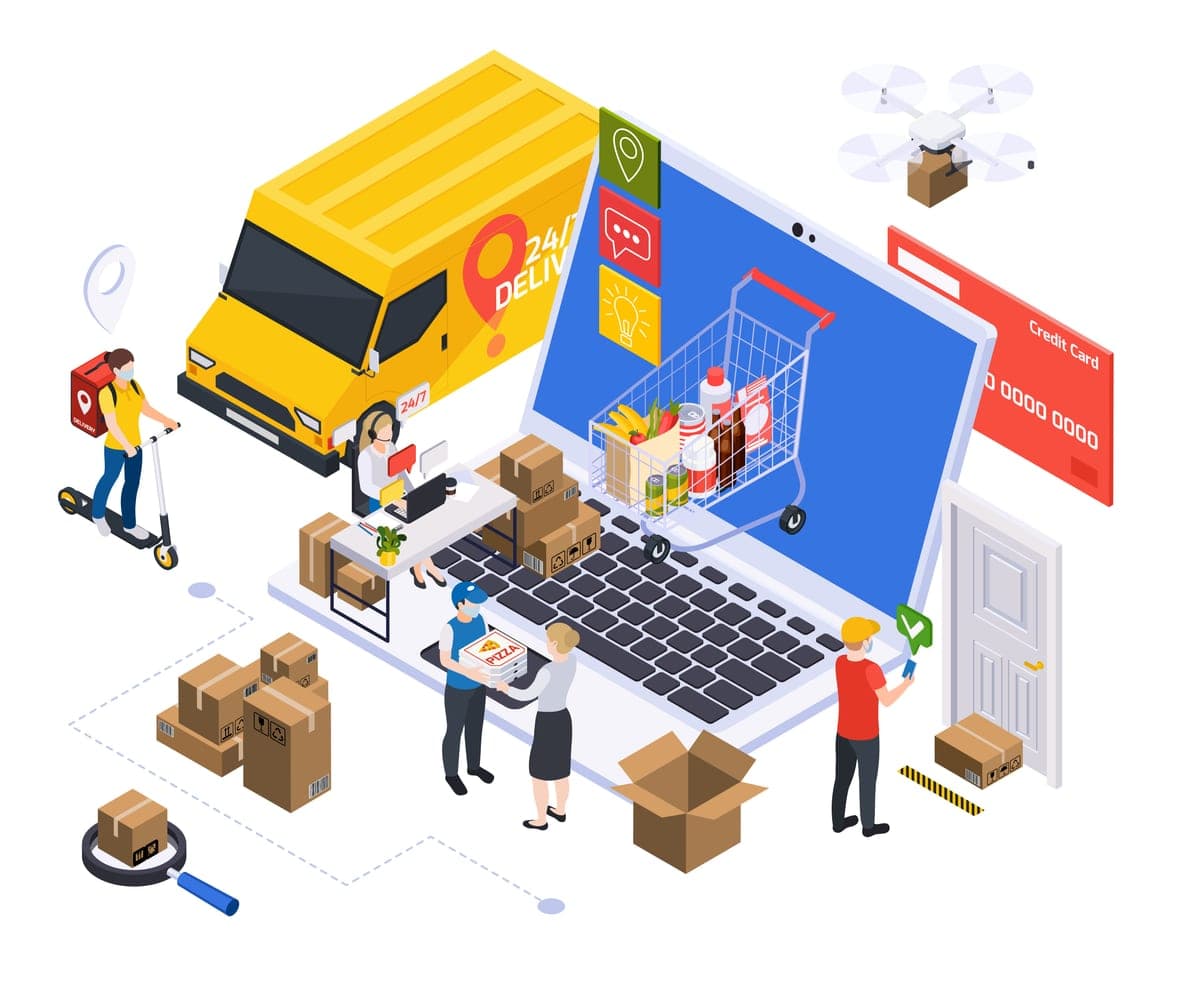
TL;DR — Top 5 Order Management Software Platforms in 2026
- nventory.io — Best for multichannel Shopify-first sellers. 23 commerce channels synced, AI-driven routing, unified order and inventory management in one platform.
- Brightpearl — Best for retail + wholesale omnichannel. Automation-first, built for brands with complex channel mixes and high order volumes.
- Cin7 — Best for product companies with complex inventory. Deep B2B, EDI, and multi-location support in one system.
- Linnworks — Best for high-volume multichannel automation. Scales to thousands of daily orders across dozens of channels.
- Zoho Inventory — Best free-tier entry point for SMBs. India-built, GST-native, and genuinely useful before you hit the ceiling.
The right pick depends on your channel mix and order volume, not your feature count. A seller on one Shopify store needs a completely different software for order management than a brand running Shopify, Amazon, Walmart, and TikTok Shop simultaneously.
There is a consistent pattern across ecommerce brands that scale past ₹10 crore, cross the 1,000-orders-a-day threshold, and expand to five or six sales channels without their operations falling apart. It is not better products. It is not more marketing spend. It is not a larger team. It is that their operational infrastructure — specifically, their order management software — was built for the business they were becoming, not just the business they were at.
The brands on the other side of that line, the ones stalling at ₹2 to 3 crore, dreading peak season, getting Amazon seller health warnings, and working Sundays to reconcile spreadsheets, are almost always running order management that was never designed for the scale it is being asked to handle. A Shopify order screen that worked fine at 30 orders a day. A patchwork of sync apps that holds together until it does not. A WhatsApp thread with the supplier that is not a system.
In 2026, software for order management has become the single clearest dividing line between ecommerce brands that scale calmly and ones that grow into operational chaos. This guide covers what the top sellers are actually running, why it works, and how you evaluate, choose, and implement the same class of platform for your specific operation. No generic listicle. No vendor marketing. The architecture, the criteria, the cost, and the operational reality — exactly as top operators know them.
Table of Contents
- What Is Order Management Software?
- The 10 Best Order Management Software Platforms in 2026 (Ranked)
- Key Takeaways
- What Top Sellers Do Differently With Order Management Software
- Order Management Software vs OMS vs ERP vs WMS vs IMS
- How Order Management Software Actually Works
- The Architecture of Modern Order Management Software
- The Operational Metrics Order Management Software Should Improve
- Who Needs What Tier of Order Management Software
- Order Management Software for Different Business Models
- How to Evaluate Order Management Software Without Getting Burned
- Order Management Software and AI: What Actually Matters in 2026
- The True Cost of Inadequate Order Management Software
- Building vs Buying Order Management Software
- How Order Management Software Connects to the Rest of Your Stack
- The Signals That Tell You It Is Time for a Proper OMS
- Final Word
- Useful Sources
- Frequently Asked Questions
What Is Order Management Software?
Order management software is a platform that captures, validates, routes, fulfills, tracks, and handles returns for customer orders — across every sales channel a business operates — from a single unified system.
At its simplest, it is mission control for orders. A customer places an order on Amazon. Simultaneously, a different customer orders the same SKU on Shopify. Both orders arrive in one queue. The system checks real-time inventory, reserves stock, routes each order to the optimal fulfillment location, generates shipping labels, dispatches through the right carrier, pushes tracking to both customers and both channels, and handles any returns through a standardized workflow.
At its most sophisticated — distributed order management (DOM) as Gartner defines it in its 2025 Market Guide for Distributed Order Management Systems — it dynamically orchestrates fulfillment across a network of warehouses, distribution centers, stores, and dropship suppliers in real time, based on configurable rules for cost, speed, and service level.
What unites these levels is the core concept: one system holds the authoritative record for every order, and every channel, warehouse, and carrier reads from and writes to that record. The absence of that single record is precisely what causes the operational chaos that brings most operators to this category in the first place.
The 10 Best Order Management Software Platforms in 2026 (Ranked)
Most "best of" lists for order management systems are not written for operators. They are written for affiliate revenue. The tools that rank highest are often the tools that pay the highest commission, not the tools that survive contact with a real warehouse at 3,000 orders per month. That framing is wrong, and it costs operators real money when they onboard the wrong platform and spend six weeks migrating off it.
What actually matters when choosing the best order management software has nothing to do with which tool has the longest feature list. It comes down to four operational variables: how many sales channels you run, how many orders you process per month, how many warehouses or fulfillment locations you manage, and whether you are Shopify-first or genuinely omnichannel.
1. nventory.io — Best for Multichannel Shopify-First Sellers
nventory.io is purpose-built for the operator who started on Shopify and grew into a multichannel problem. It offers 30+ integrations in total, of which 23 are commerce channels — marketplaces like Amazon, Walmart, eBay, Etsy and Flipkart, storefronts like Shopify and WooCommerce, social commerce including TikTok Shop, and POS — all under a single unified order management layer. Order routing is rules-based and runs automatically once you configure it, while the AI layer handles demand forecasting and surfaces reorder recommendations for you to approve — every AI action asks for explicit confirmation before it executes. The platform is not trying to be an ERP. It is trying to be the operational control center for a multichannel seller who needs stock accuracy across every channel simultaneously, with sub-5-second sync that prevents overselling under load.
The honest tradeoff: nventory.io is optimized for ecommerce operators, not manufacturers. If you need bill-of-materials tracking, work orders, or production scheduling, this is not the right tool. If you need to stop overselling across 5+ channels and automate the operational work that currently requires three spreadsheets and a part-time VA, it is the right tool.
Best for: Shopify-first sellers expanding to 3+ channels, brands managing 500–50,000 orders per month, operators who need ecommerce order management software without enterprise-level implementation overhead.
2. Brightpearl — Best for Retail + Wholesale Omnichannel
Brightpearl is an automation-first retail operating system built for brands that run physical retail, wholesale, and ecommerce simultaneously. Its workflow automation engine handles order processing, inventory updates, and fulfillment rules without manual triggers. It integrates natively with Shopify, BigCommerce, Magento, and major marketplaces. Pricing is quote-based, with typical mid-market deployments running $2,000–$5,000/month including implementation.
The honest tradeoff: Brightpearl's strength is its automation depth, but that depth comes with configuration complexity. Operators who want a plug-and-play setup will find the onboarding investment significant. Operators who invest in proper configuration get one of the most automated order management platforms in the Tier 3 category.
Best for: Retail and wholesale brands with complex omnichannel operations, high order volumes, and the implementation budget to configure the platform properly.
3. Cin7 — Best for Product Companies With Complex Inventory
Cin7 (Core and Omni) is the most complete off-the-shelf solution for brands that sell across retail, wholesale, and ecommerce simultaneously. It includes a built-in B2B portal, EDI support, POS, and light manufacturing (MRP) in its higher tiers. Multi-location inventory tracking is native, not bolted on. Cin7 Core starts at $349/month; Omni is custom-quoted for larger operations.
The honest tradeoff: Cin7 has a real learning curve. Expect a week of setup for a multi-channel brand and budget for a certified implementation partner if you are migrating thousands of SKUs. The interface rewards operators who invest in configuration. It punishes operators who want plug-and-play.
Best for: Brands doing $500K+ across three or more channels, operations with a wholesale side, businesses that need EDI, and product companies where inventory complexity — not just order volume — is the core operational challenge.
4. Linnworks — Best for High-Volume Multichannel Automation
Linnworks is built for sellers who process thousands of orders daily across dozens of channels and need automation to handle the volume without proportional headcount growth. It covers order routing, multichannel listing management, shipping automation, and inventory sync across Amazon, eBay, Walmart, Shopify, and 100+ other channels. Pricing is custom-quoted, volume-based, and typically starts around $449/month for mid-market operations.
The honest tradeoff: Linnworks is a powerful platform that rewards operators who invest in learning its automation rules. It is not the most intuitive interface in the category, and the onboarding investment is real. For sellers at 500+ orders per day who have outgrown lighter tools, that investment pays back quickly.
Best for: High-volume multichannel sellers who need automation at scale, particularly operators managing large SKU catalogs across multiple marketplaces simultaneously.
5. Zoho Inventory — Best Free-Tier Entry Point for SMBs
Zoho Inventory is the most credible free option in the market. Its free plan covers 50 orders per month, one user, and one warehouse location, with native connections to Shopify, Amazon, eBay, and Etsy. Paid plans start at $29/month globally when billed annually ($39 month-to-month) and add multi-warehouse tracking, batch and serial number support, and higher order volumes. In India the paid tiers run ₹999 (Standard), ₹2,299 (Premium), ₹4,999 (Plus), and ₹7,499 (Enterprise) per month, all exclusive of GST. It is India-built, which matters for the India section below.
The honest tradeoff: Zoho Inventory assumes you are building inside the Zoho ecosystem. The deeper you go, the more it nudges you toward Zoho Books, Zoho CRM, and Zoho Analytics. If your accounting lives in QuickBooks, the sync works but you are paying for ecosystem features you will never use.
Best for: Solo sellers and small ecommerce operators under 50 orders per month, order management software for small business operators who want a free start before committing to a paid platform, and Indian sellers who need GST-native order management solutions.
6. NetSuite OMS — Best for Enterprise-Scale Operations
NetSuite is the ERP benchmark for mid-market and enterprise operations. Its order management module covers demand forecasting, multi-warehouse visibility, vendor management, global compliance, and supply chain automation under one system. Pricing is custom-quoted and typically starts well above $1,000/month once modules and implementation are factored in.
The honest tradeoff: NetSuite is expensive and slow to implement. Deployment timelines of 3–6 months are common. It is not a tool you adopt to solve a current problem; it is a tool you adopt because your current problem is that you have outgrown everything else. Most brands under $50M revenue are buying more complexity than they need.
Best for: Enterprises with global operations, complex supply chains, and IT resources to support a full ERP deployment. The cloud-based order management system capabilities are genuine at enterprise scale, but overkill below it.
7. Salesforce Order Management — Best for Salesforce Commerce Cloud Users
Salesforce Order Management is the natural choice for brands already running Salesforce Commerce Cloud as their storefront. It handles omnichannel order orchestration, inventory visibility, and fulfillment workflows natively within the Salesforce ecosystem. Pricing is custom-quoted and enterprise-level.
The honest tradeoff: Outside the Salesforce ecosystem, this platform is not a competitive choice. The value proposition is entirely predicated on existing Salesforce infrastructure. If you are not already in that ecosystem, the implementation cost and complexity make it the wrong starting point.
Best for: Enterprise retailers and brands already invested in Salesforce Commerce Cloud who need order management platforms that integrate without middleware.
8. ShipStation — Best for Shipping-Heavy DTC Brands
ShipStation is the dominant order processing software for DTC brands whose primary operational pain is shipping cost and label volume, not multichannel stock sync. It connects to 300+ integrations, rate-shops across carriers in real time, handles batch label printing, and manages returns. Pricing starts at $14.99/month for the Starter tier; the Premium tier at $349.99/month adds advanced inventory management and warehouse management features.
The honest tradeoff: ShipStation is shipping software with order management features, not an order management system with shipping features. The distinction matters at scale. If multichannel inventory accuracy is your core problem, a platform built inventory-first will serve you better. If shipping cost reduction and label volume are the primary pain, ShipStation earns its place.
Best for: DTC brands with high shipment volumes, single or dual-channel operations, and shipping cost optimization as the primary operational goal.
9. inFlow Inventory — Best for B2B + Purchase Order Workflows
inFlow is a clean, well-designed online order management system built around B2B workflows — purchase orders, sales orders, customer-specific pricing, and reorder management. The cloud version starts at approximately $129/month for the Entrepreneur plan (2 team members, 100 sales orders/month, 1 location). There is no permanent free tier on the cloud product; a 14-day trial is available.
The honest tradeoff: inFlow is not built for high-volume multichannel ecommerce. Its channel integrations are narrower than Cin7 or nventory.io. It excels at the B2B purchase-order workflow, not at syncing stock across five marketplaces simultaneously.
Best for: B2B wholesalers, distributors, and small manufacturers who need clean purchase-order management without enterprise complexity. Strong choice for order management software for small business operators in the B2B space.
10. Shopify — Best for Single-Channel Shopify-Native Sellers
Shopify's native order management is the right answer for one specific operator profile: a seller who is exclusively on Shopify, processing under 50 orders per day, and not planning to add a second channel in the next 12 months. It is free with the platform, handles basic order tracking software functions, and integrates with Shopify's own fulfillment network.
The honest tradeoff: Shopify's native order management is not an order management system in the full sense. It does not handle multichannel sync, intelligent routing across multiple warehouses, or returns management at scale. The moment you add Amazon, eBay, or a second fulfillment location, you have outgrown it.
Best for: Single-channel Shopify-native sellers under 50 orders/day who want zero additional software cost and have no immediate plans to expand to other channels.
Comparison Table: Best Order Management Software 2026
| Tool | Best For | Starting Price | Free Trial | Channels Supported | Multichannel Sync |
|---|---|---|---|---|---|
| nventory.io | Multichannel Shopify-first sellers | Contact for pricing | Yes (14-day) | 23 native (30+ integrations) | Yes — real-time |
| Brightpearl | Retail + wholesale omnichannel | Custom quote (~$2K+/mo) | Demo only | 50+ | Yes — real-time |
| Cin7 | Complex inventory, wholesale, EDI | $349/mo (Core) | Trial available | 700+ integrations | Yes — real-time |
| Linnworks | High-volume multichannel automation | Custom quote (~$449+/mo) | Demo only | 100+ | Yes — real-time |
| Zoho Inventory | SMB free-tier entry / India | $29/mo (free plan available) | Yes (free plan) | Shopify, Amazon, eBay, Etsy | Yes — native |
| NetSuite OMS | Enterprise-scale operations | Custom quote ($1,000+/mo) | No | Broad via SuiteCommerce | Yes — native |
| Salesforce OMS | Salesforce Commerce Cloud users | Custom quote (enterprise) | No | Salesforce ecosystem | Yes — native |
| ShipStation | Shipping-heavy DTC brands | $14.99/mo | Yes (30-day) | 300+ integrations | Limited |
| inFlow Inventory | B2B + purchase order workflows | ~$129/mo | Yes (14-day) | Shopify, Amazon, eBay | Limited |
| Shopify | Single-channel Shopify-native sellers | Included with Shopify plan | N/A | Shopify only | No |
Key Takeaways
Before diving deeper, here are the essential facts for operators evaluating this category:
Order management software unifies orders, inventory, and fulfillment from every sales channel into one real-time system. Sub-5-second sync across channels is the 2026 engineering baseline — anything slower causes overselling under load. The real cost of inadequate order management is typically 4 to 9% of revenue lost to overselling, stockouts, late dispatch penalties, and customer service overhead. OMS is not ERP, WMS, or inventory management; each is a distinct category, and conflating them leads to both overpurchasing and underpurchasing. Native integrations beat middleware at every scale and are the most underrated evaluation criterion. AI has moved from premium to baseline — demand forecasting, anomaly detection, and intelligent routing are now standard expectations in any serious order management platform. The right tier depends on your business model: D2C, marketplace, B2B, dropshipping, and hybrid all have genuinely different requirements.
What Top Sellers Do Differently With Order Management Software
The gap between top-quartile and bottom-quartile ecommerce operators is not primarily explained by marketing budgets, product selection, or brand strength. According to analysis from McKinsey on omnichannel retail delivery, it is overwhelmingly explained by inventory accuracy and operational reliability. McKinsey notes that stores generally have lower inventory-accuracy rates, 70 to 90%, than the more than 99.5% distribution centers typically enjoy — and that real-time, not daily, stock visibility is required when online and offline shoppers draw from the same inventory pool. Translated into plain English: the brands winning in 2026 have their order management working. The brands struggling often do not.
Here is what specifically separates how top sellers use order management software from how average operators use it.
They treat the OMS as the source of truth, not a reporting tool. Average operators use their OMS to see what happened. Top sellers use it to drive what happens next — routing rules, reorder triggers, channel allocation, carrier selection. The OMS is active infrastructure, not passive reporting.
They connect every channel natively before they need to. Top sellers connect their fifth and sixth channels before the operational pressure of those channels demands it. Average operators add channels first, then scramble to connect them. The order matters because system migrations during growth are far more painful than building the right foundation early.
They set channel-specific stock buffers deliberately. Every top seller running Amazon alongside their D2C storefront shows Amazon 85 to 95% of true stock, not 100%. That 5 to 15% buffer absorbs sync delays and prevents cancellations that damage seller health. Average operators never configure this and pay for it with periodic account warnings.
They measure the eight operational metrics weekly, not monthly. Order accuracy, cycle time, on-time delivery, cancellation rate, return rate, cost per order, inventory accuracy, valid tracking rate. Top sellers track all eight weekly at minimum. Most average operators check these monthly at best, when problems have already compounded.
They adopt the mobile layer seriously. Top sellers run their operations from their phones. Stock checks, new order alerts, dispatch confirmations, return initiations — all mobile-first. This is not a lifestyle preference; it is operational speed. Warehouse teams that check dashboards on mobile act faster than teams that wait until they are back at a desk.
They size their OMS platform to one tier above where they are. A brand doing 200 orders/day on a platform rated for 50 orders/day is a brand about to have a very bad peak season. Top sellers consistently run platforms with headroom, not out of caution, but because peak season always arrives faster and bigger than expected.
They invest in implementation, not just license. Average operators sign an OMS contract, do a two-hour onboarding call, and then struggle for six months. Top sellers invest in proper implementation — clean data migration, channel validation, team training, routing rule configuration — before going live. The platform pays back faster because it is configured correctly from day one.
This is the pattern. Not a secret formula. Not an exclusive club. Just operational discipline, applied consistently, with software architected to support it.
Order Management Software vs OMS vs ERP vs WMS vs IMS
These four categories of software are routinely confused, often deliberately by vendors who want to position their product as solving more than it does. Here are the honest distinctions, which matter significantly for buying decisions.
Order Management Software / OMS
Captures orders from every channel, validates them, routes them to the optimal fulfillment location, coordinates shipping and tracking, and manages returns. Its job is the order lifecycle — from placement through delivery and post-delivery. Order management platforms in this category are the operational backbone for any multichannel seller.
Inventory Management System (IMS)
Tracks stock levels across locations and channels. Its job is the stock count — what you have, where it is, and when to reorder. Modern platforms typically bundle IMS and OMS together because the two are deeply interdependent: every order management decision depends on accurate inventory data.
Warehouse Management System (WMS)
Manages physical operations inside a warehouse — receiving, putaway, pick paths, packing stations, slotting, cycle counting. Its job is warehouse floor operations. A WMS works beneath an OMS, handling the physical execution that the OMS directs.
Enterprise Resource Planning (ERP)
A broad business suite covering finance, HR, procurement, manufacturing, and sometimes inventory and orders as modules within a larger system. Its job is the entire business. ERPs come in when a business has financial and organizational complexity that outgrows specialized tools — typically around $50M revenue for most product companies.
The practical decision for most ecommerce brands: Under ₹5 crore annual revenue, use an OMS + IMS bundled in one platform, integrating with accounting software (QuickBooks, Xero, Tally). Between ₹5 and ₹50 crore, use OMS + IMS, possibly with a WMS for larger warehouse operations, still integrating with accounting. Above ₹50 crore, consider whether an ERP makes sense — but many brands still prefer best-of-breed OMS + ERP rather than ERP-native order management. The mistake is buying an ERP when you need an OMS: you overpay for two years and underuse most of what you are paying for.
How Order Management Software Actually Works
For operators who want to understand the system, not just use it, here is how modern order management systems function under the hood.
Step 1: Order Capture via API or Webhook
A customer places an order on any connected channel — Shopify, Amazon, eBay, WooCommerce, TikTok Shop, Walmart, Etsy, Meesho, retail POS, B2B portal. The channel fires a webhook (a real-time HTTP notification) to the OMS the moment the order is confirmed. The OMS receives the order data — line items, quantities, customer address, payment status — within seconds.
The engineering quality here matters: systems that poll for new orders on a schedule (every 5, 15, or 30 minutes) are fundamentally slower and more failure-prone than webhook-driven systems. Sub-5-second order capture is the modern baseline for any serious platform.
Step 2: Validation
The OMS checks the order against multiple criteria before committing: real-time inventory availability, payment authorisation status, address sanity checks, fraud signals, and any special handling requirements. Orders that fail validation are flagged for review, not silently lost.
Step 3: Inventory Reservation
The system immediately reserves the ordered inventory so the same units cannot be sold to a different customer on a different channel in the milliseconds it takes to process the order. This locking mechanism is where race conditions cause overselling in weaker order management solutions.
Step 4: Intelligent Routing
The system decides where the order fulfills from. A serious routing engine factors: which locations have stock, which is geographically closest to the customer, which carrier delivers fastest at the required cost, whether the channel has specific fulfillment rules (Amazon orders to FBA, others to your warehouse), and whether any location is over its capacity threshold. Manual routing past 50 orders a day is operationally untenable. Nventory's intelligent order routing applies these rules automatically.
Step 5: Pick, Pack, and Ship
The fulfillment location receives the pick list. Staff or automated systems pick the items, pack them, generate a shipping label through the carrier integration, and hand off to the carrier. Modern order processing software generates labels at the most competitive rate across multiple carriers in real time.
Step 6: Tracking and Status Push
The carrier generates a tracking number. The OMS receives it, updates the order record, pushes it back to the originating channel (critical for Amazon's Valid Tracking Rate metric), and sends customer notification. Status updates continue as the parcel moves through the carrier network. This is where order tracking software capabilities separate serious platforms from basic tools.
Step 7: Post-Delivery and Returns
Returns are initiated by the customer through a self-serve portal. The OMS generates an RMA, issues a return label, receives the item at the appropriate location, runs inspection workflow, decides disposition (restock, refurbish, donate, dispose), re-injects restockable inventory within 24 to 48 hours, and processes the refund or exchange.
The Architecture of Modern Order Management Software
Understanding the six components of a modern OMS helps both when evaluating vendors and when diagnosing why an existing setup is failing.
Component 1: Channel Connectors
Native API connections to every sales channel — Shopify, WooCommerce, Amazon, eBay, Walmart, TikTok Shop, Etsy, Meesho, retail POS, B2B portals. The quality of these connections is the most underrated factor in OMS performance. Native integrations are stable and maintained. Middleware (Zapier-style connectors) breaks under load. Scraping-based connections die when platforms update their UI. Always ask vendors which integrations are native and which run through third-party connectors.
Component 2: Real-Time Inventory Layer
The master stock count — one number per SKU per location — updated in real time as orders arrive and stock moves. This is the foundation everything else stands on. Without it, every downstream decision — routing, allocation, reordering — operates on stale data. The Nventory inventory engine maintains this in real time across every connected channel simultaneously.
Component 3: Distributed Order Routing Engine
The rules-based intelligence that decides which fulfillment node handles each order. Configuration ranges from simple (route all orders to Warehouse A) to sophisticated (route based on inventory availability, shipping cost, carrier cut-off time, warehouse capacity, delivery promise, and channel-specific rules). The sophistication of the routing engine often separates top-quartile order management platforms from the rest.
Component 4: Multi-Carrier Shipping Layer
Native connections to carrier APIs — UPS, FedEx, DHL, USPS, and regional carriers like Delhivery, Shadowfax, Bluedart, Ecom Express, and India Post — plus aggregators like EasyPost for the long tail of regional and international carriers. Rate-shopping across carriers per order typically saves 8 to 15% on shipping costs. The Nventory shipping module integrates natively with UPS, USPS, FedEx, and DHL, adds regional carriers including Delhivery, ShipRocket, and Porter, and reaches 100+ carriers through its EasyPost connection — worth distinguishing when you need a direct carrier account rather than aggregator access.
Component 5: Returns Management
A complete reverse logistics flow: customer initiation through a self-serve portal, RMA generation, return label issuance, receiving, inspection, disposition, stock re-injection, and financial settlement. Returns that take more than 48 hours from arrival to restocked inventory leave significant capital invisible.
Component 6: Reporting and Analytics
Order-level visibility (status, channel, location, carrier, SKU) combined with operational metrics (order accuracy, cycle time, on-time delivery, cancellation rate, return rate, cost per order). The best platforms now add AI-driven anomaly detection and demand forecasting on top of core reporting.
The Operational Metrics Order Management Software Should Improve
These are the metrics that separate brands with tight order management from brands with chaotic operations. Track all of them weekly.
Order Accuracy Rate — percentage of orders fulfilled with the right item, right quantity, right address, undamaged. Target: above 99%.
Order Cycle Time — time from order placement to dispatch. Under 24 hours is healthy; under 12 hours is excellent. Amazon and TikTok Shop measure this against the handling time committed in your listing.
On-Time Delivery Rate — percentage of orders delivered within the promised window. Track by carrier and service level separately.
Cancellation Rate — percentage of orders cancelled after placement. Above 2% triggers Amazon seller health warnings; above 3% risks listing suppression.
Return Rate — percentage of orders returned. Track by SKU, channel, and reason code — patterns reveal product, listing, or supplier problems.
Cost Per Order Fulfilled — all-in fulfillment cost: labour, packaging, carrier fees, processing. Track by channel and warehouse separately.
Inventory Accuracy — percentage of SKUs where system count matches physical count. Target above 99%. Discrepancies cause overselling and phantom stock.
Valid Tracking Rate — Amazon-specific. Percentage of orders with valid tracking pushed within Amazon's required window. Target above 95%.
Who Needs What Tier of Order Management Software
Order management software is not one category — it is a spectrum. The right tier depends on your business model, order volume, channel mix, and operational complexity. Using the wrong tier in either direction is expensive.
Tier 1: Platform-Native Order Management (D2C, single channel, early stage)
Shopify's order screen, WooCommerce's default order manager, BigCommerce's native order management. Free with the platform. Functional for single-channel operations under 50 orders/day.
Best for: D2C brands selling only on their own storefront, under 50 orders/day, single warehouse.
Outgrown when: You add a second channel, exceed 50 orders/day, or need intelligent routing across locations.
Tier 2: App-Based Extensions (multichannel startup, 50 to 200 orders/day)
Third-party apps or plugins that extend native order management — multichannel sync apps, basic routing, basic shipping integration. ShipStation and similar tools sit here.
Best for: Growing ecommerce brands hitting the limits of native tools but not yet ready for a full OMS platform investment.
Outgrown when: You have three-plus channels, two-plus warehouses, or 200-plus orders/day. App fragmentation and sync failures start appearing.
Tier 3: Unified OMS + IMS Platforms (multichannel, 200 to 10,000 orders/day)
Dedicated platforms that handle order management, inventory management, multi-warehouse routing, native carrier integration, and returns in one system. This is the tier where nventory.io, Brightpearl, Cin7 Omni, and Linnworks sit.
Best for: Serious multichannel ecommerce brands — three-plus channels, multiple warehouses or 3PLs, 200-plus orders/day, D2C plus marketplace plus possibly retail or quick commerce.
Outgrown when: Revenue exceeds $50M or operational complexity reaches enterprise scale.
Tier 4: Enterprise OMS / Distributed Order Management (10,000+ orders/day, enterprise scale)
Manhattan Associates, IBM Sterling, KIBO, Oracle OMS, SAP Commerce Cloud. Platforms built for enterprise retailers with complex fulfillment networks, large B2B operations, and regulatory requirements.
Best for: Enterprise retailers, large manufacturers, and B2B distributors with 10,000+ daily orders, complex fulfillment networks, and meaningful B2B requirements.
Most ecommerce operators reading this guide live in Tier 2 transitioning to Tier 3, or solidly in Tier 3. Tier 4 is a different world — different vendors, different implementation partners, different cost structures. Do not let Tier 4 vendor marketing (NetSuite, Salesforce, SAP) confuse decisions that should be made at Tier 3.
Order Management Software for Different Business Models
The "right" OMS varies significantly by business model. Most guides treat all operators as if they have identical needs — they do not.
Pure D2C Brands
Simpler order management needs — typically one or two storefronts, two or three sales channels, one or two fulfillment locations. Focus on real-time inventory sync, a clean returns flow, and carrier rate-shopping. A Tier 2 or light Tier 3 platform usually fits.
Key requirements: Shopify or WooCommerce native integration, multi-carrier shipping, returns portal, basic demand forecasting.
Multichannel Marketplace Sellers
Selling on Amazon, eBay, Walmart, Etsy, and TikTok Shop simultaneously. The most operationally complex order management scenario because each marketplace enforces its own SLAs, account health metrics, and fulfillment rules. Tier 3 is almost always required.
Key requirements: Sub-5-second multichannel sync, channel-specific routing rules, Amazon FBA/FBM routing, Valid Tracking Rate management, seller health monitoring.
For the platform-specific details on connecting Shopify and WooCommerce to Amazon and other marketplaces, see the Nventory integrations page.
Dropshipping Operators
The OMS challenge is fundamentally different — inventory lives at supplier warehouses, not owned locations. Order management means supplier coordination, blind shipping, multi-supplier routing, and tracking pull-back from suppliers into your storefront.
Key requirements: Supplier stock feed integration, automated order forwarding to suppliers, blind shipping enforcement, multi-supplier routing, tracking pull-back automation.
For the full dropshipping OMS architecture, see the Nventory dropshipping module which covers supplier automation, blind shipping, and multi-supplier routing.
B2B and Wholesale Operators
Custom pricing, credit terms, customer-specific stock allocations, quote-to-order workflows, EDI compliance for retail partners. The order shape is different from B2C; the OMS needs to accommodate both without architectural compromises.
Key requirements: B2B portal, customer-specific pricing, credit terms management, minimum order quantities, EDI integration for retail compliance.
Hybrid Operators (D2C + Marketplace + Retail + B2B)
The most complex scenario — and the most common one for any brand that has been growing for two-plus years. The OMS has to handle all of the above simultaneously, from one source of truth, without special-casing any model.
Key requirements: Everything above, unified in one system. This is precisely the scenario Tier 3 platforms are built for.
Indian Ecommerce Operators
India-specific requirements go beyond what most global OMS platforms handle natively. These include: Meesho integration, quick commerce platform support (Blinkit, Zepto, Swiggy Instamart), local carrier connectivity (Delhivery, Shadowfax, Bluedart, Ecom Express, India Post), COD reconciliation, and GST-compliant invoicing. Global platforms handle these unevenly; purpose-built platforms handle them natively.
Nventory's India coverage spans Flipkart on the marketplace side, Delhivery, Porter, ShipRocket, and Borzo on the carrier side, and Tally on the accounting and GST side. Check the full integrations list against the specific channels and carriers you run before committing, and the features overview for the multi-location routing model.
How to Evaluate Order Management Software Without Getting Burned
Vendor demos are choreographed performances. The platform you see in a demo is never the platform you live in six months after implementation. Use this framework to see past the performance.
Evaluation Criterion 1: Sync Latency — The Single Most Important Technical Metric
Ask: "What is your measured end-to-end sync latency from a sale on Channel A to stock update on Channel B?"
The answer tells you everything. Sub-5 seconds: the platform is engineered for real-time multichannel. 5 to 60 seconds: acceptable at moderate volume. Above 60 seconds: dangerous on busy days, dangerous at peak. "Near real-time" without a specific number: the platform is batching and calling it real-time.
Do not accept marketing language. Ask for a specific number and test it yourself during the trial.
Evaluation Criterion 2: Native vs. Middleware Integrations
Ask: "Is your Shopify integration native API, or does it run through a third-party connector or middleware layer?"
Native API integrations are maintained by the vendor, update when the channel's API updates, and handle authentication, retry logic, and error handling natively. Middleware (Zapier, Make, custom webhooks) is cheaper to build initially and breaks at the worst possible time — during peak traffic, during Black Friday, during a promotion.
Always ask for a list distinguishing native from non-native integrations. The gap often reveals platforms that have been stretched beyond their original design scope.
Evaluation Criterion 3: Order Routing Engine Sophistication
Ask: "Walk me through how your system decides which warehouse fulfills an order when three of my five warehouses have stock."
A simple system says "we route to the nearest location with stock." A sophisticated system says "we factor stock availability, shipping cost, carrier cut-off time, warehouse capacity, delivery promise, and channel-specific rules — and you can override any of those factors with your own rules."
The routing engine is often the highest-leverage capability in an OMS, and one of the most glossed-over in demos.
Evaluation Criterion 4: Returns Workflow Completeness
Ask: "Walk me through what happens when a customer in Delhi initiates a return on an order they placed on Amazon."
The answer should cover: customer-initiated return portal, RMA generation, return label (carrier-integrated), receiving at the right location, inspection workflow, disposition decision, stock re-injection, and refund processing — all within 48 hours.
Many platforms have order management and almost no returns management. Do not discover this after you have 200 returns in a queue.
Evaluation Criterion 5: Implementation Timeline and Migration Support
Ask: "For a brand our size with our channel mix, what does a typical implementation look like? Who owns what?"
Realistic timelines: single-channel small operation, 1 to 2 weeks. Multichannel, multi-warehouse brand, 4 to 8 weeks. Anything claiming "live in one week" for a complex operation is selling an illusion.
Ask specifically: who cleans your data? Who builds the channel integrations? Who trains your team? Who supports you in the first 30 days? Weak answers here predict painful implementations.
Evaluation Criterion 6: Trial With Real Data
Before signing anything, run a 14-day trial with your actual SKUs, actual orders, and a live channel connection. In 14 days of real operations you will see whether sync actually works at your order volume, whether the routing engine applies your rules correctly, whether the mobile app is genuinely usable on the warehouse floor, whether support responds meaningfully when something breaks, and whether the reporting tells you what you need to know.
Most OMS failures are predictable by week two of real-world use. Most vendors know this, which is why complex demos with demo data are still the industry standard. Insist on a real trial.
Evaluation Criterion 7: Pricing Model Transparency
The pricing models to avoid: per-SKU (punishes catalog growth), per-channel (punishes multichannel, which is the entire point of an OMS), per-user seat at enterprise rates (becomes expensive as your team grows). Per-order volume tiered pricing is the most predictable and operator-friendly model.
Total cost of ownership — including implementation, ongoing support, add-on modules, and integration fees — should land between 0.3% and 1% of revenue at scale. Review Nventory's pricing structure as a benchmark for how operator-aligned pricing works in practice.
Evaluation Criterion 8: Talk to a Current Customer at Similar Scale
Not a reference logo. An actual operator running the platform at similar order volume, channel mix, and business model to yours. Ask: what has broken in the last six months? How fast did support respond? What would you do differently if you were implementing again? What feature do you wish existed?
Vendors will always offer references. Ask for references of businesses similar to yours — not just the ones who say the nicest things.
Order Management Software and AI: What Actually Matters in 2026
AI has moved from a premium feature to a baseline expectation in order management software. As agentic commerce grows and AI handles more routine order routing, categorization, and fulfillment decisions, the competitive advantage shifts to teams that can adapt workflows quickly. Here is the honest breakdown of which AI capabilities are genuinely valuable and which are marketing noise.
Demand forecasting. AI-driven prediction of demand by SKU, channel, and season — factoring in seasonality, promotional uplifts, external signals, and supplier lead times. According to McKinsey research on AI-driven operations forecasting, AI-driven demand forecasting can reduce supply chain forecast errors by 20 to 50% and lower lost sales from stockouts by up to 65%. That is not a marginal improvement; it is the difference between a proactive buying strategy and a reactive one.
Anomaly detection. Identifying when a SKU is selling 10x its normal baseline before humans notice. Valuable for catching viral products, unexpected stockouts, and supplier feed failures.
Dynamic routing optimization. Routing decisions that factor real-time carrier performance, weather disruptions, and warehouse capacity — not just static rules.
Conversational operations. The shift from "open a dashboard" to "ask via WhatsApp or Slack." Nventory's AI Suite is one example — warehouse and ops teams query inventory, trigger workflows, and get order status through WhatsApp without opening a UI.
Marketing-noise AI in OMS: Generic "AI-powered insights" that surface the same information as a filtered report. "AI chatbot" customer service that is just rule-based decision trees. AI features that require weeks of training data configuration before they produce anything useful.
The test: ask vendors to demo their AI feature in a real scenario relevant to your operation. If the demo is scripted and the vendor cannot deviate from it, the feature is not mature.
The True Cost of Inadequate Order Management Software
Most operators who have not implemented proper order management software do not know what it is costing them, because the losses are diffuse and never appear as a line item.
For a multichannel ecommerce brand doing ₹50 lakh per month with inadequate order management, the typical monthly loss structure is:
Direct losses: Overselling and cancellations cost ₹1 to 2.5 lakh per month. Stockout revenue loss runs ₹50,000 to ₹1 lakh per month. Marketplace penalties — listing suppression, account warnings — are irregular but represent ₹50,000 to ₹5 lakh events.
Indirect losses: Customer service overhead for "where is my order" and cancellation handling costs ₹30,000 to ₹70,000 per month in equivalent labour cost. Dead stock carrying cost runs ₹20,000 to ₹60,000 per month on capital tied up in over-ordered SKUs. Missed growth from avoided channel expansion — operators who do not add a fifth channel because they cannot manage the operational load of four — represents variable foregone revenue, often ₹50,000 to ₹5 lakh per month.
Total monthly cost of inadequate order management at ₹50L revenue: ₹2 to 10 lakh, or 4 to 20% of revenue.
A Tier 3 OMS that fixes most of this costs ₹15,000 to ₹1,00,000 per month. The ROI calculation is not ambiguous.
Building vs Buying Order Management Software
A question that arises for technically sophisticated operators: should we build our own OMS rather than buying one?
The honest answer: almost never, for almost anyone.
The case for building: Your workflows are genuinely unique and cannot be supported by any off-the-shelf platform. You have a large, experienced engineering team with dedicated capacity for this project. You expect to process 100,000+ orders daily within 12 months, justifying the investment.
The reality of building: A functional OMS with multichannel sync, routing, carrier integration, and returns takes 12 to 24 months to build properly. The ongoing maintenance burden — keeping up with marketplace API changes, carrier API updates, storefront version changes — consumes 2 to 4 engineers permanently. You rebuild what vendors have already built, rather than investing engineering capacity in your actual competitive advantage. Most "we will build it" decisions result in either an incomplete system or a massively delayed timeline.
The right approach for most operators is choosing a ready-made cloud-based order management system and adapting it to your business. It is usually the fastest way to move off spreadsheets, especially when you sell through common channels like Shopify, Amazon, or retail POS and want plug-and-play integrations. Build only when no existing platform can handle your specific requirements. Buy in every other case.
How Order Management Software Connects to the Rest of Your Stack
Order management software does not operate in isolation. Understanding how it connects to adjacent systems clarifies both what to buy and how to configure it.
Ecommerce storefronts — Shopify, WooCommerce, BigCommerce, Magento. The OMS sits downstream of the storefront, receiving orders the moment checkout completes. Nventory connects natively to all major storefronts — see the full integrations list.
Inventory management — In most modern platforms, OMS and IMS are bundled together. Nventory's real-time inventory engine maintains a single master stock count across every channel and location simultaneously.
Supplier management — Supplier purchase orders, dropship order forwarding, and supplier stock feeds flow through the OMS in dropshipping and hybrid models. Nventory's dropshipping module handles this entire supplier-side workflow.
Carriers and shipping — Native carrier integrations for label generation, rate-shopping, and tracking. See the Nventory shipping module for coverage.
Accounting and ERP — Orders, COGS, returns, and inventory data flow to QuickBooks, Xero, NetSuite, or Tally. Native integrations through Nventory's accounting connectors eliminate manual re-entry.
Customer service tools — When a customer asks "where is my order," the agent should see the full order trail across every channel without switching systems.
Mobile operations — Full OMS access from mobile is now standard. See the Nventory iOS app and Android app for mobile-native order management.
The Signals That Tell You It Is Time for a Proper OMS
The signs that your current order management approach has reached its limit:
You spend more than 5 hours per week reconciling orders across channels. You have oversold on more than one occasion in the last quarter. You are selling on three or more channels and fulfilling from more than one location. Your Amazon or TikTok Shop account health has been flagged. You are dreading rather than excited about adding a new sales channel. Your team has more than two people whose jobs revolve around tracking orders. You are losing more than 2% of revenue to preventable overselling, late dispatch, or cancellations. Peak season requires hiring extra people just to manage order coordination. You cannot confidently answer "how many units of SKU X do I have available right now" in under 30 seconds.
Three or more of these: you are overdue. The longer you wait, the more expensive the eventual transition becomes — because you will migrate under peak operational stress rather than in a planned window.
Final Word
The order management software top sellers use in 2026 is not secret, not expensive relative to what it returns, and not beyond the reach of brands at any serious scale. What separates the operators using it well from the ones still patching together spreadsheets and sync apps is not access — it is the decision to treat operations as a competitive advantage rather than a cost to minimize.
The pattern is consistent: brands that build proper OMS infrastructure before they need it scale calmly. Brands that wait until the pain is undeniable migrate under pressure, pay more, and spend six months recovering lost ground. The inflection point always arrives faster than expected.
In 2026, the technology has matured, the vendor landscape is genuinely competitive, and the cost of getting order management right is now a fraction of the cost of getting it wrong.
If you are building or rebuilding your order management capability, see how Nventory unifies orders, inventory, and fulfillment across 23 commerce channels and multiple warehouses with sub-5-second real-time sync, intelligent order routing, native carrier integration, dropshipping automation, and an AI Suite with conversational operations through WhatsApp.
Review pricing, browse the full integrations list, download the iOS app or Android app to experience mobile-native order management, start a 14-day free trial with your real data, or book a demo with the team.
For deeper context across the operational stack, explore the Nventory features overview, the order routing engine, the shipping module, and the AI Suite.
Useful Sources
- Gartner, 2025 Market Guide for Distributed Order Management Systems — the vendor landscape for distributed order management, with 20 representative vendors
- McKinsey, Retail's Need for Speed: Unlocking Value in Omnichannel Delivery — inventory accuracy benchmarks across stores and distribution centers
- McKinsey, AI-Driven Operations Forecasting in Data-Light Environments — the 20 to 50% forecast-error and up-to-65% lost-sales figures cited above
Frequently Asked Questions
Order management software (OMS) is a platform that captures orders from every sales channel, validates them against real-time inventory, routes each order to the optimal fulfillment location, coordinates shipping and tracking, and handles returns, all from a single unified system. It replaces the spreadsheets, email threads, and disconnected apps that break down once a business sells across multiple channels. The core value is a single authoritative record for every order that every channel, warehouse, and carrier reads from simultaneously.
An OMS focuses on the order lifecycle, from placement through fulfillment and returns. An ERP is a broader business suite covering finance, HR, procurement, and manufacturing. Most ecommerce brands under ₹50 crore revenue benefit from a specialized OMS that integrates with their accounting software, not an ERP that tries to replace everything. Buying an ERP when you need an OMS means overpaying for two years and underusing most of what you are paying for.
An OMS orchestrates the order lifecycle across channels and locations. A WMS manages physical warehouse operations, putaway, pick paths, packing stations, within a single facility. A WMS works beneath an OMS, handling the physical execution that the OMS directs. Conflating the two leads to either overpurchasing (buying a WMS when you need an OMS) or underpurchasing (assuming your OMS handles warehouse floor operations it was never designed for).
Entry-tier platforms run ₹15,000 to ₹40,000 per month for under 5,000 orders/month. Mid-tier for multichannel brands runs ₹40,000 to ₹1,50,000 per month. Enterprise platforms run ₹1,50,000 to ₹10,00,000+ per month, often with custom contracts and implementation fees. Total cost of ownership should stay between 0.3% and 1% of revenue at scale. ShipStation starts at $14.99/month for basic shipping; Cin7 Core starts at $349/month; Brightpearl and Linnworks are custom-quoted for mid-market deployments.
For single-channel Shopify stores under 50 orders/day, Shopify's native order management typically suffices. The moment you add a second channel or fulfill from multiple locations, a dedicated OMS becomes the right architecture. The cost of not having one, in oversells, manual reconciliation time, and missed channel expansion, almost always exceeds the subscription cost within the first quarter.
Yes. Sub-5-second multichannel sync, inventory locking during simultaneous sales, and channel-specific stock buffers together eliminate 95 to 99% of overselling incidents. The remaining 1 to 5% risk is managed through configured buffers showing 90 to 95% of true stock to channels with slower sync windows. This is the single most operationally valuable capability of any serious order management system.
For a single-channel operation under 5,000 SKUs, 1 to 2 weeks from signup to live. For multichannel, multi-warehouse brands, 4 to 8 weeks is realistic. Enterprise implementations (Tier 4) typically run 3 to 12 months. Migration speed depends almost entirely on data cleanliness, clean SKU data before migrating. The operators who go live fastest are the ones who invest in data hygiene before they start, not during.
Yes, and modern Tier 3 platforms are designed to handle both simultaneously. B2B-specific requirements (custom pricing, credit terms, minimum order quantities, EDI) should be supported natively rather than bolted on. Cin7 and Brightpearl are the strongest options for true D2C plus B2B hybrid operations. inFlow is the cleaner choice for businesses that are primarily B2B with a smaller D2C component.
Distributed order management is the advanced OMS capability that dynamically orchestrates fulfillment across a network of warehouses, stores, and dropship suppliers in real time, routing each order to the optimal node based on configurable rules for cost, speed, and service level. Gartner's 2025 Market Guide for Distributed Order Management Systems identifies 20 representative vendors in this space. DOM is increasingly standard in Tier 3 platforms and table stakes in Tier 4.
Yes. A capable OMS treats supplier warehouses as virtual fulfillment nodes alongside owned warehouses, with routing rules that determine dropship vs. owned-inventory fulfillment per order. Supplier stock feed integration, blind shipping enforcement, and tracking pull-back are all part of this flow. Nventory's dropshipping module covers the full supplier-side workflow including multi-supplier routing and automated order forwarding.
Reputable platforms are GDPR-compliant, encrypt data in transit and at rest, maintain 99.9% uptime SLAs, and support role-based access controls. The main security risk in most implementations is credentials hygiene on the operator side, enforce two-factor authentication and least-privilege access from day one. Always ask vendors for their SOC 2 compliance status and uptime history before committing.
Indian operators need: Meesho integration, quick commerce support (Blinkit, Zepto, Swiggy Instamart), local carrier connectivity (Delhivery, Shadowfax, Bluedart, Ecom Express, India Post), COD reconciliation, and GST-compliant invoicing. Global platforms handle these with varying quality; purpose-built platforms handle them natively. Zoho Inventory is the strongest India-built option for GST compliance. For multichannel scale across Amazon.in, Flipkart, and international channels, a cloud-based order management system like nventory.io provides the sync infrastructure that India-specific tools do not cover.
The best order management software for small businesses in India depends on whether GST compliance or multichannel scale is the primary constraint. For GST compliance and domestic marketplace coverage, Zoho Inventory is the strongest choice, it is India-built, priced in rupees (paid tiers start at ₹999/month and rise to ₹7,499/month for Enterprise, exclusive of GST), and natively integrates with Amazon.in, Flipkart, and Shopify with GST-compliant invoicing built into the core product. Unicommerce is a strong alternative for Indian sellers who need deep Meesho and Flipkart integration with multi-warehouse support across cities. For Indian sellers operating at scale across both domestic and international channels simultaneously, nventory.io provides the cloud-based order management infrastructure, including multi-warehouse routing, real-time multichannel sync, and 30+ integrations spanning 23 commerce channels, that India-specific tools do not cover at that breadth.
For omnichannel retail in India, brands running physical stores alongside Amazon.in, Flipkart, and their own Shopify storefront, the key requirements are POS integration, regional warehouse routing, and GST-compliant invoicing across every channel. Zoho Inventory handles the GST and multi-warehouse layer natively. Unicommerce is purpose-built for Indian multichannel retail and covers POS, marketplace, and quick commerce integrations in one platform. For brands that have grown beyond domestic channels and need to manage international marketplaces alongside Indian retail, a Tier 3 platform with native Indian carrier support and cloud-based order management handles the full complexity without requiring separate tools for each channel.
Multi-warehouse support in India requires zone-based fulfillment routing, the ability to route an order from a Mumbai warehouse to a customer in Maharashtra while routing a Bangalore order from a Karnataka-based 3PL, optimizing for delivery speed, GST input credit, and carrier availability. Zoho Inventory supports multiple warehouse locations natively and is GST-compliant, making it the strongest starting point for Indian operators managing stock across multiple cities. Its warehouse allowance scales with the tier: 1 location on the free plan, 2 on Standard (₹999/month), 4 on Premium (₹2,299), 6 on Plus (₹4,999), and 10 on Enterprise (₹7,499), all exclusive of GST, with batch and serial number support and higher order volumes unlocking alongside. For Indian sellers operating at scale across Amazon.in, Flipkart, and international channels simultaneously, nventory.io's routing engine handles zone-based fulfillment logic across multiple warehouse locations with real-time multichannel sync; warehouse location limits vary by plan, so check the pricing tiers against the number of locations you run.
The purpose of order management software is to give every ecommerce business a single authoritative record for every order, from the moment a customer checks out to the moment the return is restocked. It eliminates the operational chaos that comes from managing orders across multiple channels, warehouses, and carriers in separate systems. The measurable outcomes are higher order accuracy, faster fulfillment cycles, fewer oversells, lower cost per order, and the operational headroom to add new channels without proportional headcount growth.
Choose ecommerce order management software by matching five variables to your operation: number of sales channels (one channel vs. three-plus channels changes the category entirely), order volume per month (under 50 orders, free tiers work; above 500 orders, purpose-built platforms pay for themselves), warehouse count (multi-location requires native multi-location support, not workarounds), demand forecasting need (seasonal products and long lead times require AI-driven forecasting), and existing tech stack (Shopify-first operations need platforms built around Shopify's API). Run a 14-day trial with real data before signing anything. Ask vendors for their measured sync latency, not their marketing language.
The key features in a modern order management system are: real-time multichannel inventory sync (sub-5-second is the 2026 baseline), intelligent order routing across multiple fulfillment locations, native integrations with your specific sales channels (not middleware), multi-carrier shipping with rate-shopping, a complete returns management workflow, AI-driven demand forecasting, and mobile-native operations. Secondary features that matter at scale include channel-specific stock buffers, distributed order management (DOM) for complex fulfillment networks, and conversational operations via WhatsApp or Slack. Any platform missing the first five is not fit for a serious multichannel operation.
Yes, any serious order management platform integrates natively with the major ecommerce storefronts: Shopify, WooCommerce, BigCommerce, Magento, and Wix Commerce. The critical distinction is native API integration versus middleware. Native integrations are maintained by the OMS vendor, update automatically when the storefront's API changes, and handle authentication and error recovery natively. Middleware connectors (Zapier, Make) are cheaper to build and break under load. Always ask vendors to specify which storefront integrations are native and which run through third-party connectors.
Integration between an OMS and your ecommerce platforms works through direct API connections or webhooks. For Shopify, the OMS installs as an app in the Shopify App Store and connects via OAuth, the entire process typically takes under 30 minutes for a native integration. For Amazon, the OMS connects via Amazon's Selling Partner API (SP-API), which requires seller account authorization. For WooCommerce, integration uses REST API keys generated in the WooCommerce settings panel. The implementation sequence that minimizes disruption: connect channels in read-only mode first, validate that order data is flowing correctly, then switch to live mode with inventory sync enabled. Never enable live inventory sync on a new channel connection before validating that the data mapping is correct, a misconfigured SKU mapping can cause immediate oversells.
Related Articles
View all
PO Systems for Small Business: What They Do and How to Choose One
How purchase order systems work, when a small business actually needs one, the four types available, and a checklist for choosing between them.

Best Inventory Management Software in India in 2026: Matched by Business Model
Best inventory management software in India, matched by business model, honest pricing, and what top Indian ecommerce operators actually run in 2026.